
Meta Description
Discover how the metabolic window after 7 PM affects fat burning, sleep, and cravings. Learn a science-backed nighttime routine to boost metabolism naturally and lose weight while you sleep.
 Introduction
Most people believe weight loss is all about eating less and exercising more.
But what if the real secret happens when you’re doing nothing… asleep?
What happens after 7 PM is something most people completely ignore — yet it may be the missing piece in your fat loss journey.
Emerging research suggests that your body enters a critical “metabolic window” at night, where it decides whether to burn fat or store it.
And here’s the surprising part:
 A few small habits in your evening routine can completely change that outcome.
In this guide, you’ll discover how to activate your body’s natural fat-burning system — using a simple, science-backed nighttime routine.
 Why Nighttime Habits Matter More Than You Think
There’s a hidden reason why late-night habits affect fat storage.
At night, your body doesn’t just “slow down” — it switches functions.
Instead of focusing on energy output, it shifts toward:
Hormonal regulation
Cellular repair
Fat metabolism
Brain recovery
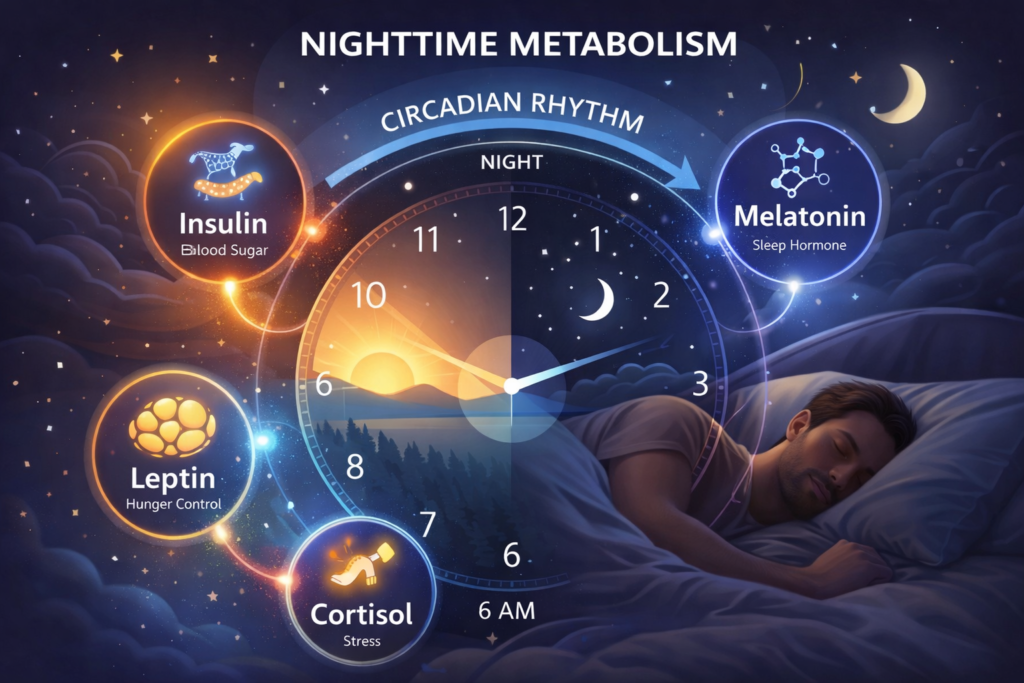
During this phase, key hormones are released:
Melatonin (sleep regulation)
Growth hormone (fat burning + muscle repair)
Leptin & ghrelin (hunger control)
Cortisol (stress response)
According to the National Sleep Foundation, poor sleep is directly linked to weight gain, increased cravings, and metabolic dysfunction.
In other words:
Your night routine doesn’t just affect sleep — it affects your weight.
 The “Metabolic Window” After 7 PM
Your body behaves differently at night — and almost nobody talks about this.
As evening approaches, your circadian rhythm begins preparing your body for rest.
Melatonin levels rise… and something important happens:
Your body becomes less efficient at processing sugar and carbohydrates.
Research from the National Institutes of Health shows that circadian rhythm plays a critical role in glucose metabolism and fat storage.
This means:
Eating heavy meals late → higher fat storage
Stable evening routine → better fat burning
This is why many experts recommend:
Lighter dinners
Consistent sleep schedules
Reduced nighttime stimulation
Because a small mistake at night can slow your metabolism more than a bad meal during the day.
 Step 1: Eat a Metabolism-Friendly Dinner
A simple mistake in your evening routine could be sabotaging your fat loss.
Dinner should be eaten 2–3 hours before sleep.
Why?
Because digestion competes with fat-burning processes during the night.
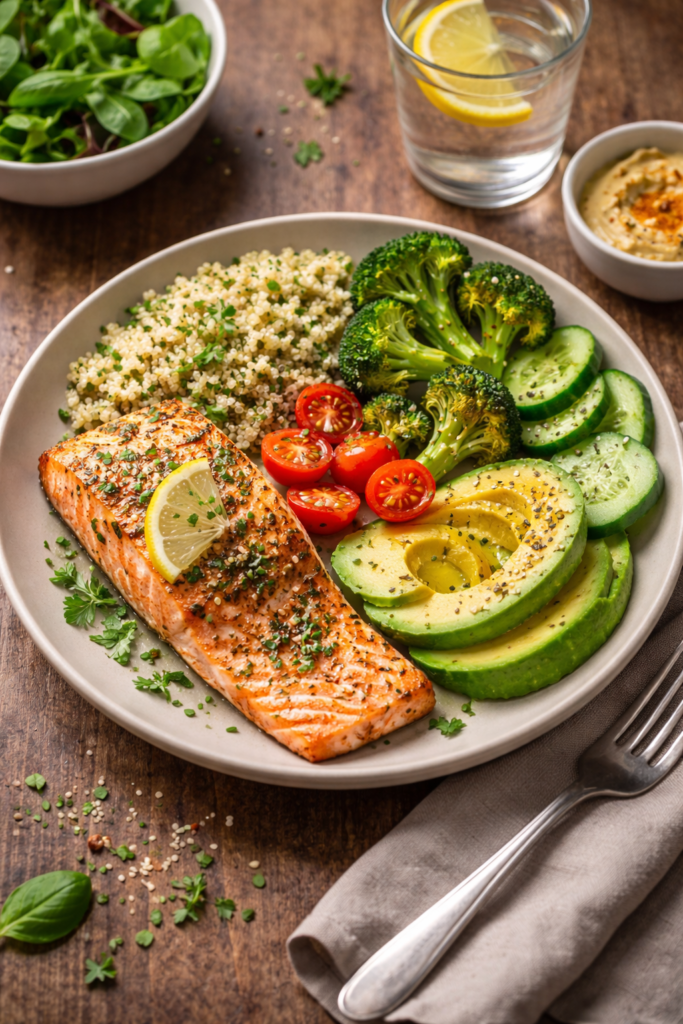
A proper dinner includes:
Lean protein (chicken, fish, tofu)
Fiber-rich vegetables
Healthy fats
Moderate complex carbs
Protein plays a key role here.
According to research highlighted by Harvard Health Publishing, protein helps regulate appetite and supports metabolic function.
It also reduces late-night cravings — one of the biggest causes of weight gain.
 Step 2: The 10-Minute Habit That Changes Everything

This simple habit can change how your body burns fat while you sleep.
Walking for just 10 minutes after dinner can:
Reduce blood sugar spikes
Improve digestion
Lower insulin levels
Increase fat oxidation
According to the Centers for Disease Control and Prevention, regular physical activity helps improve metabolism and overall health.
And better glucose control = less fat storage.
 Step 3: The Hidden Enemy — Artificial Light

Here’s something most people don’t realize:
Your phone at night might be blocking your fat loss.
Artificial light suppresses melatonin.
And when melatonin drops:
Sleep quality decreases
Cortisol increases
Hunger hormones become unstable
This creates the perfect storm for:
Late-night cravings
Fat storage
Poor recovery
Experts recommend avoiding screens at least 60 minutes before bed.
Instead, try:
Reading
Stretching
Meditation
Journaling
These habits signal your body to enter fat-burning mode.
 Step 4: Sleep — The Ultimate Fat-Burning Tool

Most people underestimate this:
Fat loss doesn’t just happen in the gym — it happens in your sleep.
During deep sleep, your body releases growth hormone, which supports:
Fat breakdown
Muscle repair
Metabolic balance
According to the National Sleep Foundation, poor sleep disrupts leptin and ghrelin — increasing hunger and reducing satiety..
This is why people who sleep poorly tend to eat more the next day — if you want to improve your sleep quality and support fat burning, check out this complete guide.
 Step 5: Hydration and Night Metabolism
Some people also use natural supplements designed to support nighttime metabolism and improve fat burning.
If you want to see one of the most popular options right now , check it here.
Here’s a small detail that makes a big difference:
Even mild dehydration can slow your metabolism.
Water supports:
Nutrient transport
Fat oxidation
Cellular function
Drinking a small glass of water or herbal tea before bed can support overnight metabolism.
Some natural compounds have been studied for their ability to support nighttime fat metabolism and improve sleep quality.
If you want to enhance your results, you can explore clinically backed supplements designed to work during your body’s overnight metabolic cycle.
 How Stress at Night Blocks Fat Burning
There’s a hidden factor most people ignore: stress.
Especially at night.
When stress levels rise, your body releases cortisol.
And high cortisol is linked to:
Belly fat storage
Increased appetite
Sugar cravings
Managing stress before sleep is essential.
Effective methods include:
Deep breathing
Light stretching
Meditation
Gratitude journaling
 The Science of Sleep Cycles and Fat Loss
Many metabolic processes happen between midnight and 3 AM.
If you sleep too late, you may miss part of this fat-burning window.
During deep sleep:
Insulin sensitivity improves
Hormones reset
Fat metabolism increases
This is why consistent sleep timing matters more than most people think.
 Small Habits That Create Big Results
Weight loss is not about extreme changes.
It’s about consistent habits.
Simple actions that make a difference:
Eating earlier (reduces fat storage signals)
Walking after dinner (improves glucose instantly)
Reducing screen time (restores hormonal balance)
Sleeping consistently (optimizes metabolism)
These habits work together to create a fat-burning environment.
Can you burn fat while sleeping?
Yes — especially when hormones and sleep quality are optimized.
Is eating after 7 PM bad?
Not always, but late heavy meals can increase fat storage.
Does sleep affect metabolism?
Yes — sleep directly impacts hormones that control hunger and fat burning.
What is the best nighttime routine for weight loss?
Balanced dinner, light activity, low stress, and quality sleep.
If you want a complete step-by-step approach to losing weight while you sleep, you can explore this detailed guide here.
Your body doesn’t stop working when you go to sleep.
In fact, some of the most powerful fat-burning processes happen at night.
The real question is:
Are your habits helping… or sabotaging that process?
By adjusting your evening routine, you can turn your nights into a metabolic advantage.
Start tonight.
Because what you do after 7 PM might be the reason your results haven’t changed.